1300 023 584
Quito – A City Surrounded by Volcanoes
Before setting off on my 7-night Galápagos Islands expedition aboard the National Geographic Endeavour II with Lindblad Expeditions, I spent two nights exploring Quito, Ecuador’s capital city.
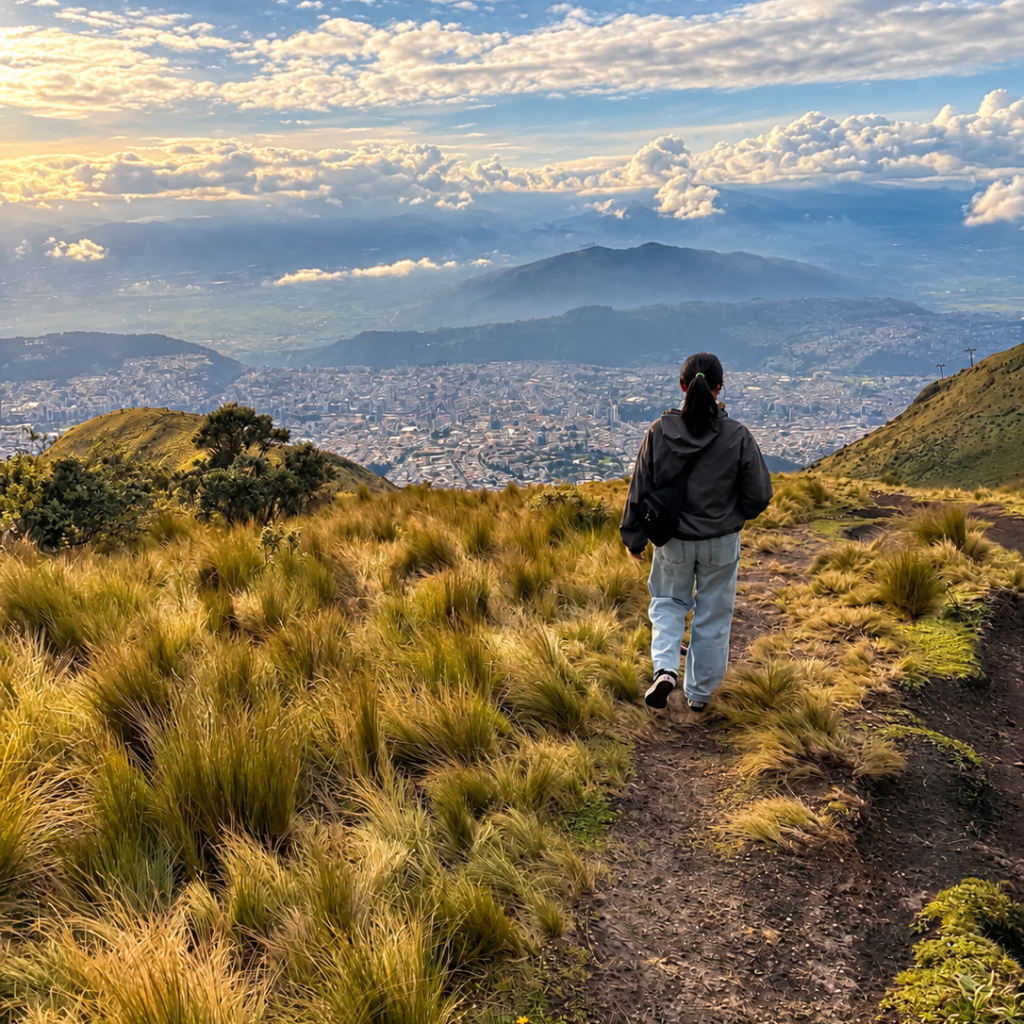
We arranged a private driver for the day, which was a great way to see some of the city’s highlights. We visited Quito’s beautiful historic Old Town, explored both the historical Equator monument and the location of the actual Equator, and took the TelefériQo cable car up the slopes of Pichincha Volcano, reaching an altitude of around 4,000 metres above sea level.
This was definitely the highlight for me! The views from the top were incredible, looking out over Quito, surrounded by mountains and volcanoes. What really surprised me was just how many volcanoes there are in Ecuador – 93 – something I hadn’t appreciated before visiting. Quito sits high in the Andes, and seeing the city spread out below with the dramatic volcanic landscape surrounding it was an amazing way to start my Ecuadorian adventure.
Travel Tip: Dress like and Onion and Layer. Weather can vary throughout the day!
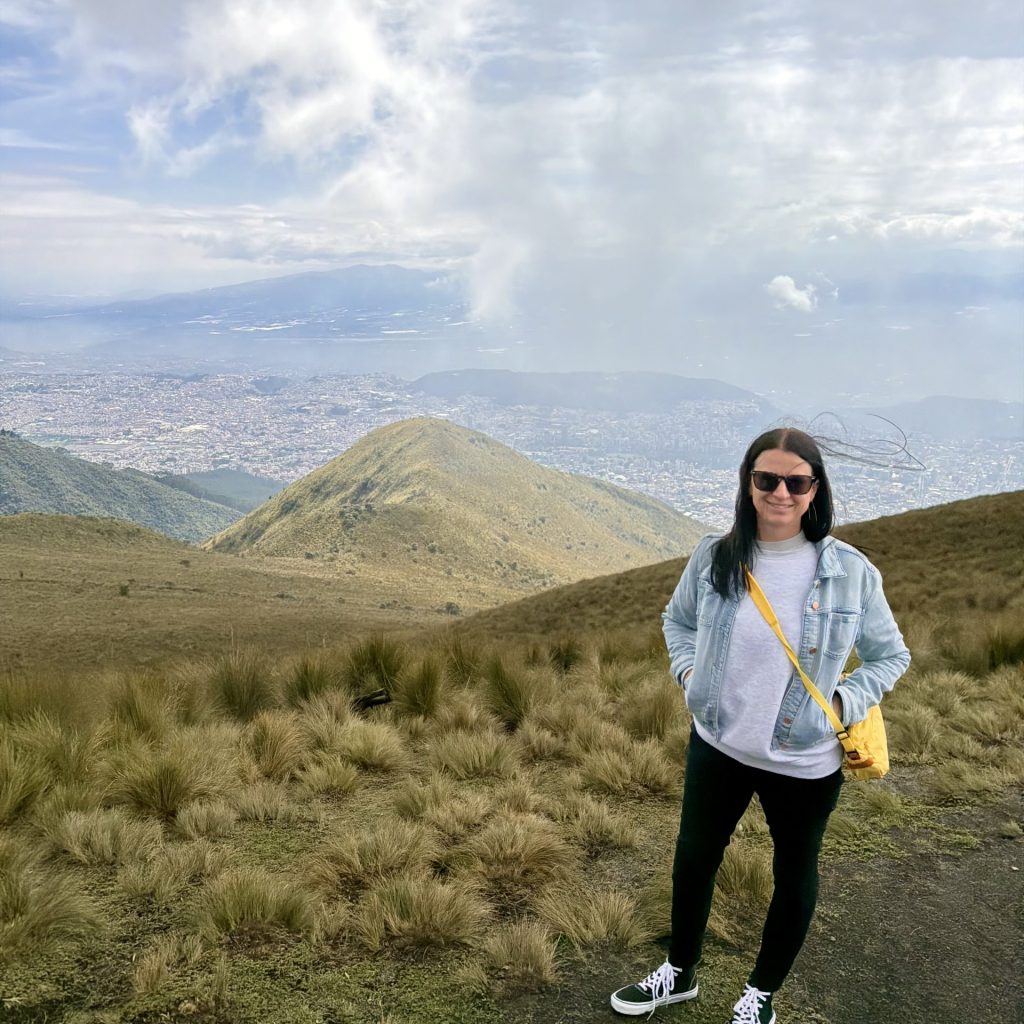
Taking in the incredible views over Quito from the slopes of Pichincha Volcano
Life on Board National Geographic Endeavour II
For the next seven nights, my home was the National Geographic Endeavour II, sailing through the Galápagos Islands with Lindblad Expeditions.
With just 96 guests on board, the Endeavour II offers a small-ship experience while still being comfortable and well-appointed. The ship has a lovely relaxed and social atmosphere, with comfortable cabins, a dining room, lounge, outdoor viewing areas and plenty of space to unwind between excursions. Being slightly larger than some of the other National Geographic ships in the Galápagos, she is also particularly well suited to families.
Another standout was the naturalists who accompanied us throughout the expedition. All Galápagos National Park naturalist guides are required to be local residents, which adds another layer of knowledge and connection to the islands. Their passion for the wildlife, history and conservation was incredible, and hearing their personal stories and experiences really brought the Galápagos to life. It was so much more than simply being shown the wildlife and terrain.
One of the things I loved about the Endeavour II was that everything revolved around exploring the destination. From Zodiac excursions and snorkelling to kayaking and guided walks, each day offered something different. The ship also has an Open Bridge policy, allowing guests to visit the captain and crew, along with an Explorers-in-Training program for younger travellers.
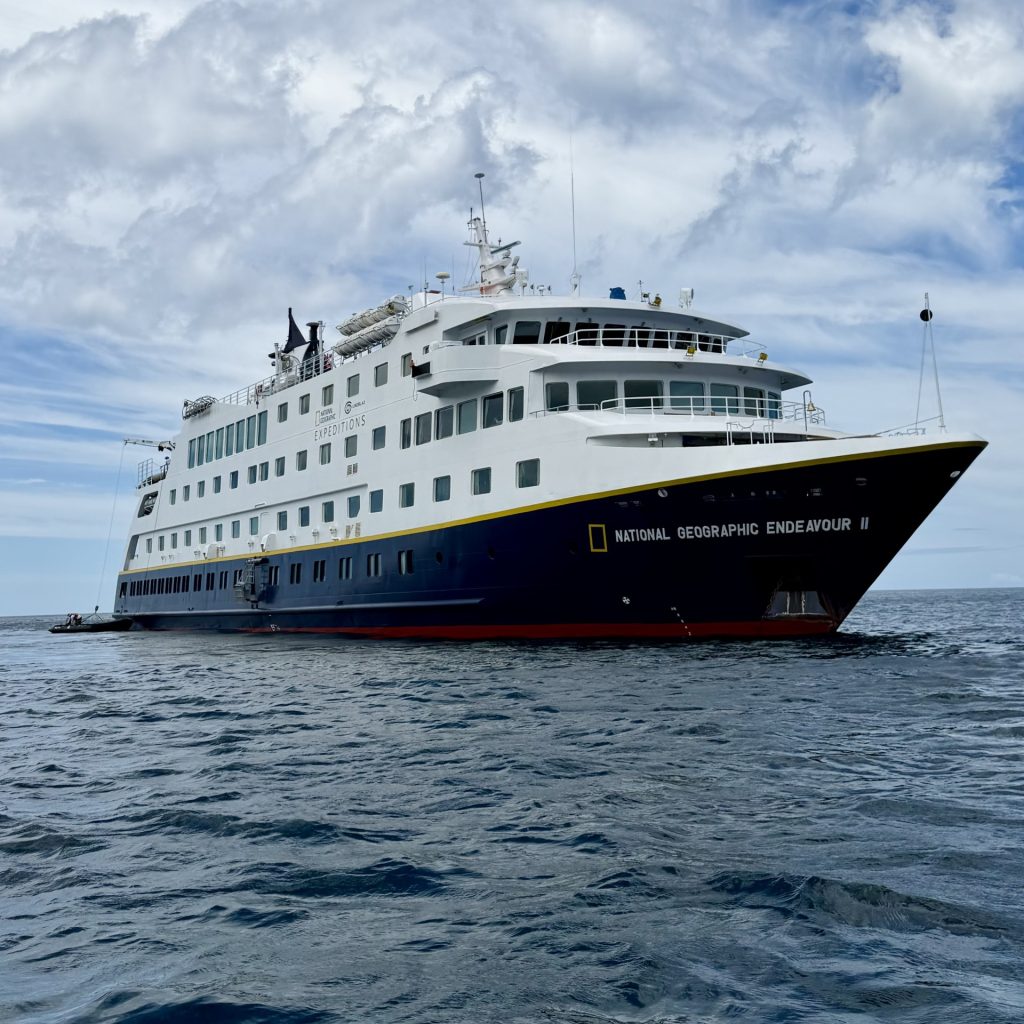
The National Geographic Endeavour II – our home for seven nights exploring the incredible Galápagos Islands.
Exploring the Galapagos – Wildlife and Adventure
Our 7-night Western Galápagos itinerary took us to the islands of Isabela, Fernandina, Santiago and Santa Cruz. We generally visited two different locations each day, with every island offering something different in terms of landscapes, terrain and wildlife.
One of the things I really enjoyed was the flexibility to do as much or as little as you wanted. Most days offered guided hikes of varying difficulty, with the naturalists explaining what to expect beforehand. For those who preferred not to hike, there was generally a Zodiac cruise option to enjoy the scenery and wildlife from the water. Snorkelling was offered most days, either from the beach or directly from a Zodiac, along with opportunities for kayaking, paddleboarding and swimming. Good mobility certainly helps, as the terrain can be uneven and rocky in places. We also experienced both wet and dry landings, so water shoes are worth bringing.
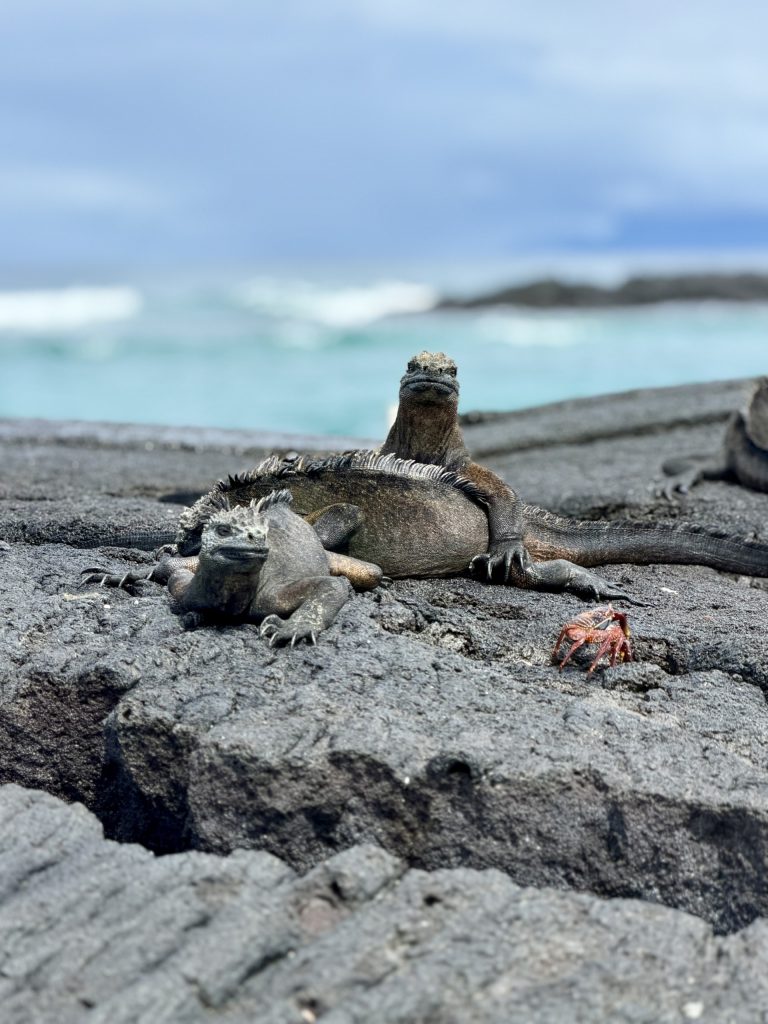
For me, the wildlife was the real highlight. What makes the Galápagos so special is how little the animals are bothered by human presence. You do need to keep a respectful distance, but the wildlife simply goes about its daily life, seemingly unaware of you being there.
Some of my favourite moments were the unexpected ones. You could be travelling along in a Zodiac, heading off on your next adventure, and suddenly spot a sea turtle popping its little head above the water, a sea lion enjoying a lazy day on the beach, or a marine iguana swimming back to shore. It was these little moments, combined with the incredible volcanic landscapes and unique wildlife, that made the Galápagos such a special destination.
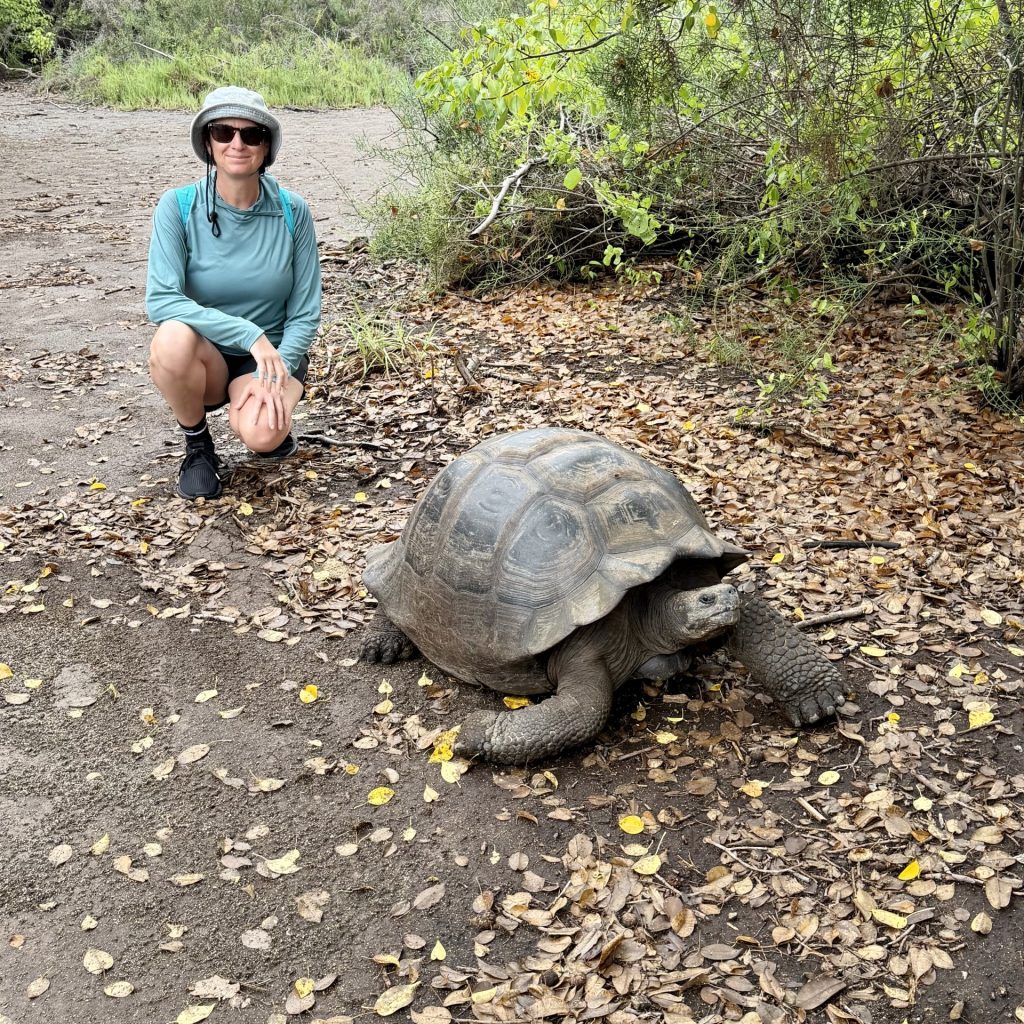
A wonderful encounter with a Galápagos giant tortoise during our hike at Urbina Bay on Isabela Island.
Charles Darwin Research Station – Protecting the Giant Tortoises
During our visit to Santa Cruz Island, we spent time at the Charles Darwin Research Station, where we learnt about the incredible conservation work being done to protect the Galápagos giant tortoises. One of the most important initiatives is the breeding programme, which has helped bring several threatened tortoise populations back from the brink of extinction. Young tortoises are raised in a protected environment until they are old enough to have a much better chance of survival before being released back into the wild.
We also learnt the story of Lonesome George, perhaps the most famous tortoise in the Galápagos. George was a Pinta Island giant tortoise, discovered in 1971, and was the last known surviving member of his species. Despite years of attempts to breed him, he sadly died in 2012 without producing any offspring, marking the extinction of the Pinta Island giant tortoise. His preserved body is now on display at the breeding centre, serving as a powerful reminder of the importance of conservation.
For me, it was fascinating to learn about the work being done to protect these incredible creatures, and how the story of one tortoise has helped raise awareness of conservation around the world.
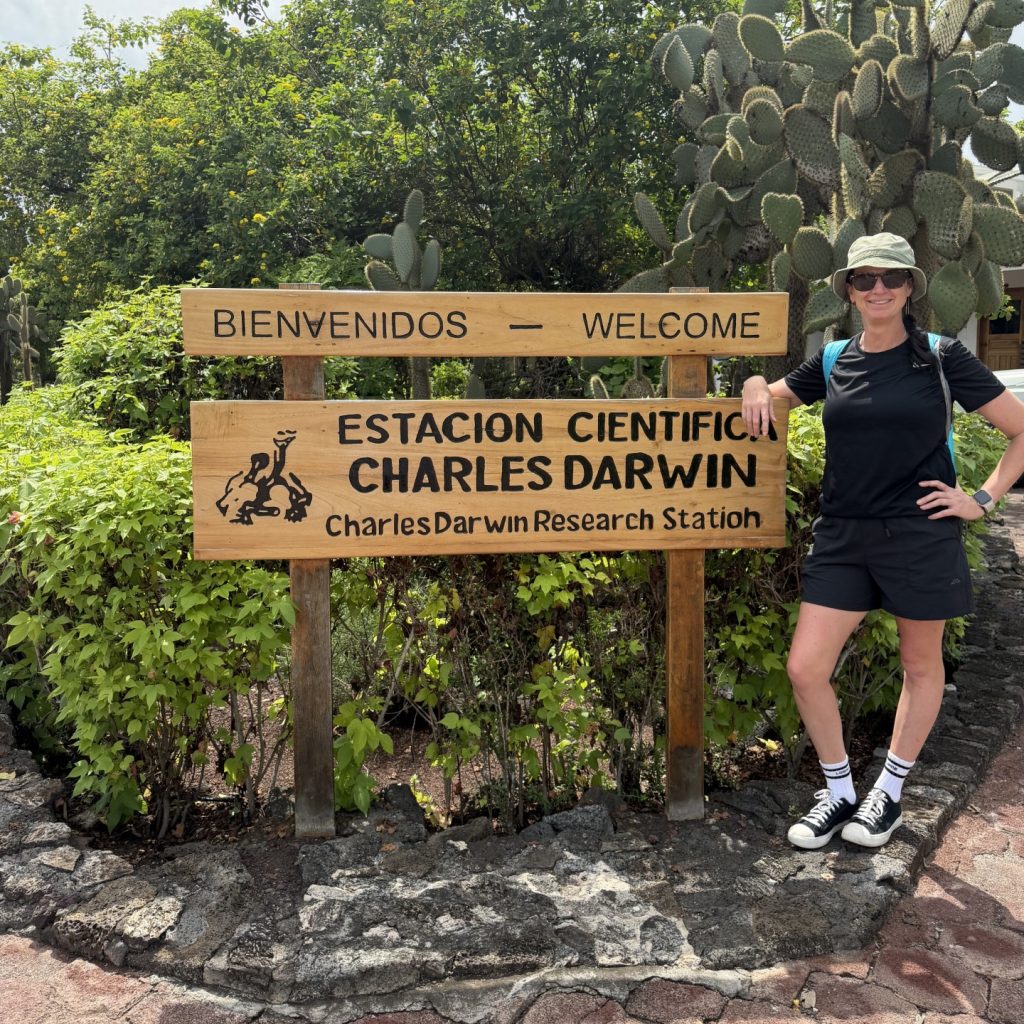
Visiting the Charles Darwin Research Station on Santa Cruz Island, learning about the incredible conservation efforts protecting the Galápagos’ unique wildlife.
Why Explore the Galápagos with National Geographic-Lindblad Expeditions?
Having now experienced the Galápagos firsthand, I can honestly say it is unlike anywhere else I have travelled. What stood out to me wasn’t just the incredible wildlife and landscapes, but how much I learnt along the way. Every day was different, and there was always something new to discover. For me, the National Geographic Endeavour II offered a fantastic balance of adventure and comfort. We spent our days exploring these incredible islands before returning to a comfortable ship, great food and a friendly atmosphere.
What makes travelling with National Geographic-Lindblad Expeditions so special is the expedition style of travel. Their knowledgeable naturalists provide an incredible insight into the wildlife, geology, flora, history and conservation of the islands, helping you understand not just what you are seeing, but how these remarkable islands came to be. It really is a much deeper way to experience the Galápagos.
Another benefit is the choice of ships to suit different travellers. From the comfortable, family-friendly National Geographic Endeavour II (96 guests) and contemporary Gemini (48 guests) to the luxurious Islander II (48 guests) and intimate Delfina catamaran (16 guests), there is something for everyone, whether travelling as a couple, family or small group.
Whether you’re travelling as a couple, with family or looking for a more luxurious experience, there is an option to suit. The Galápagos is a truly special destination, and one I would highly recommend to anyone who loves wildlife, nature and exploring somewhere a little different.
Danielle Jackson also shares what it’s like to cruise the Galápagos when wildlife and weather shape the days.
If you’re planning a similar trip, explore our expedition cruise options.
Written by Amy Slater after her adventure with National Geographic-Lindblad Expeditions.
Amy Slater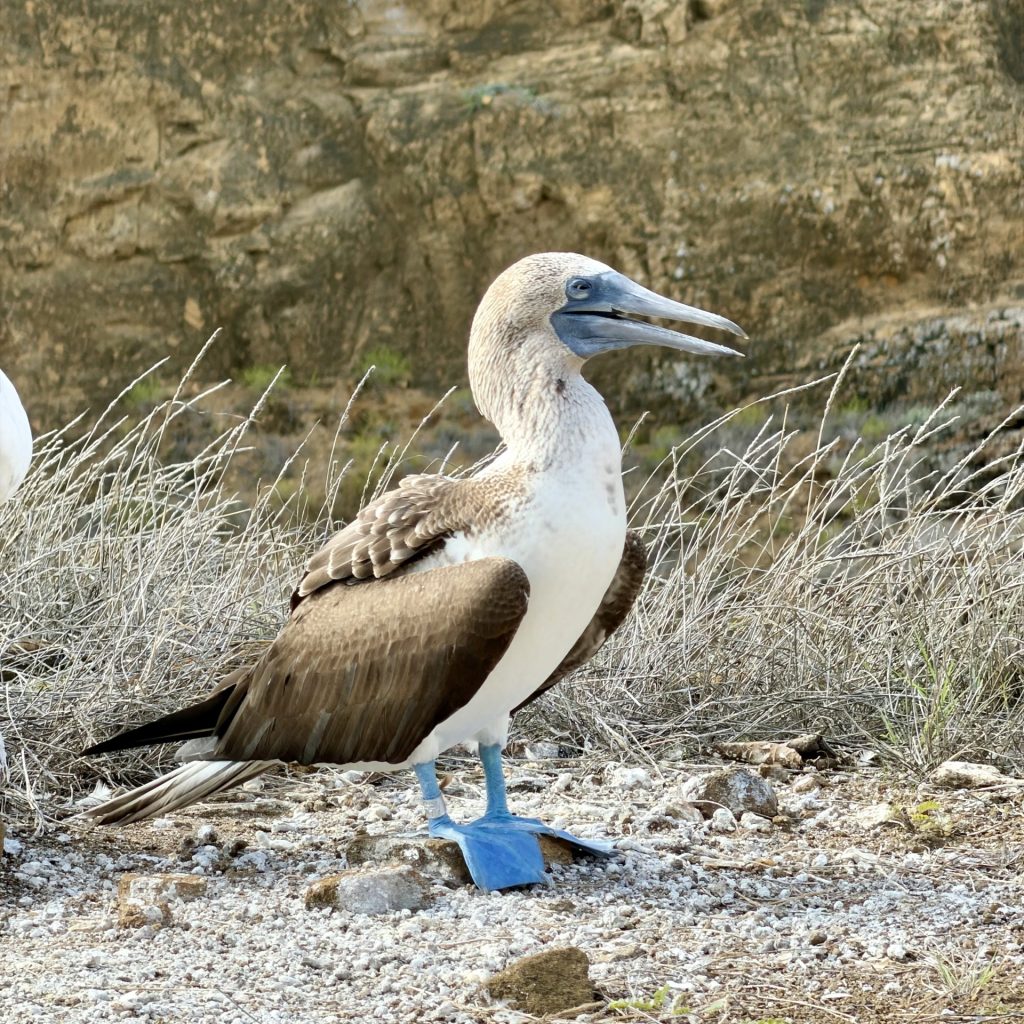
A blue-footed booby spotted during our hike at Punta Pitt on San Cristóbal Island, one of the Galápagos’ most iconic birds, famous for its bright blue feet!


Meet the author