An Unforgettable Encounter with Badgers in the Forests near York

A Woodland Retreat: My Stay in the Forest

Arrival in the Woods

There’s something magical about pulling up to a log cabin tucked away in the heart of the forest. As soon as I stepped out of the car, the air felt fresher, laced with the scent of pine and damp earth. My cabin was surrounded by tall trees, their branches swaying gently, and the soundtrack was a mix of birdsong and the occasional rustle of leaves.

The cabin itself was rustic yet cosy — wooden beams, a fireplace ready to light, and a porch that looked out into the wild woods. I knew right away this wasn’t just a place to stay; it was going to be an experience.
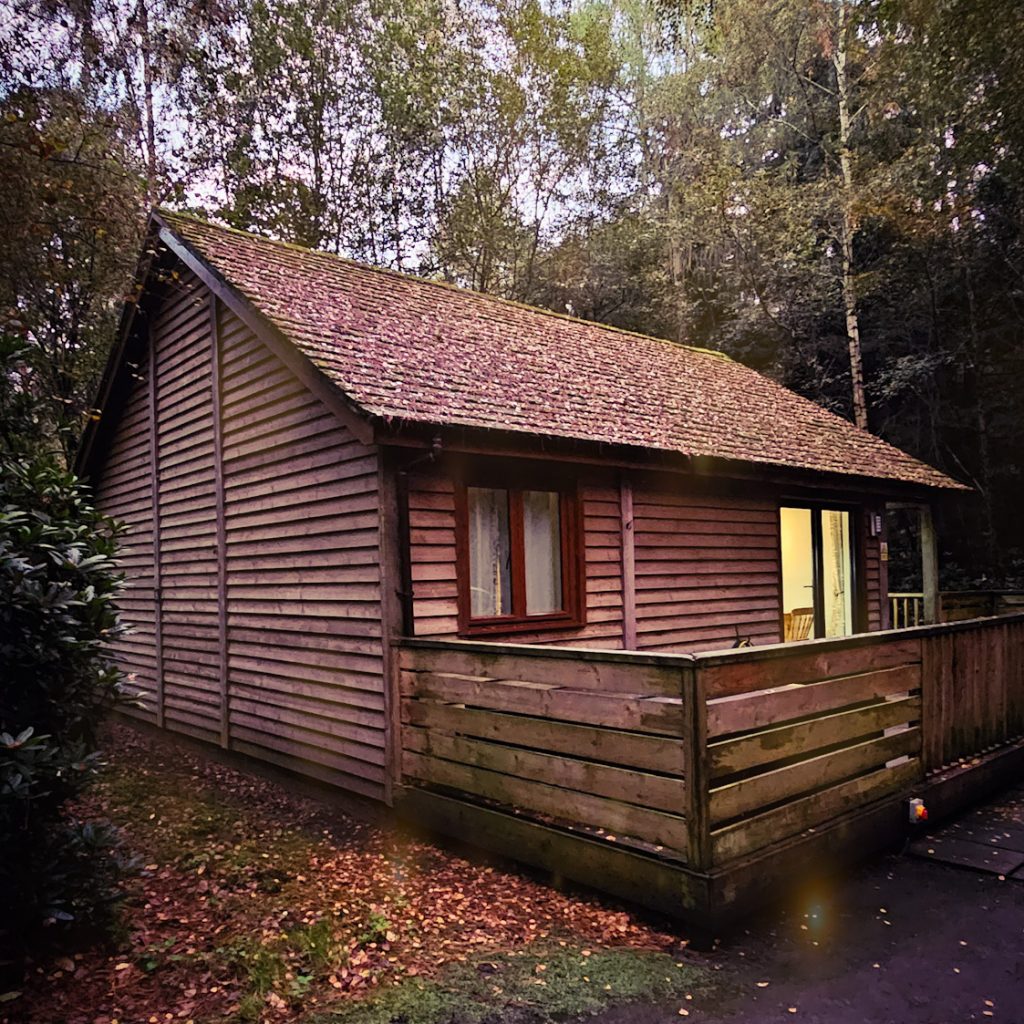
Griffon Forest Lodge

A cabin at Griffon Forest Lodge

Settling Into Cabin Life

I quickly discovered that life in the forest moves at its own pace. There was no rush, no schedule — just the slow rhythm of nature. My mornings started with coffee on the porch, watching squirrels dart along the branches. They were endlessly entertaining, chasing each other in playful bursts and occasionally pausing long enough for me to snap a photo.

Inside, the cabin was snug and peaceful, with large windows that let in soft light filtered through the trees. Every evening, I found myself drawn back out to the porch, just to sit quietly and listen. It felt like the forest was alive and breathing all around me.
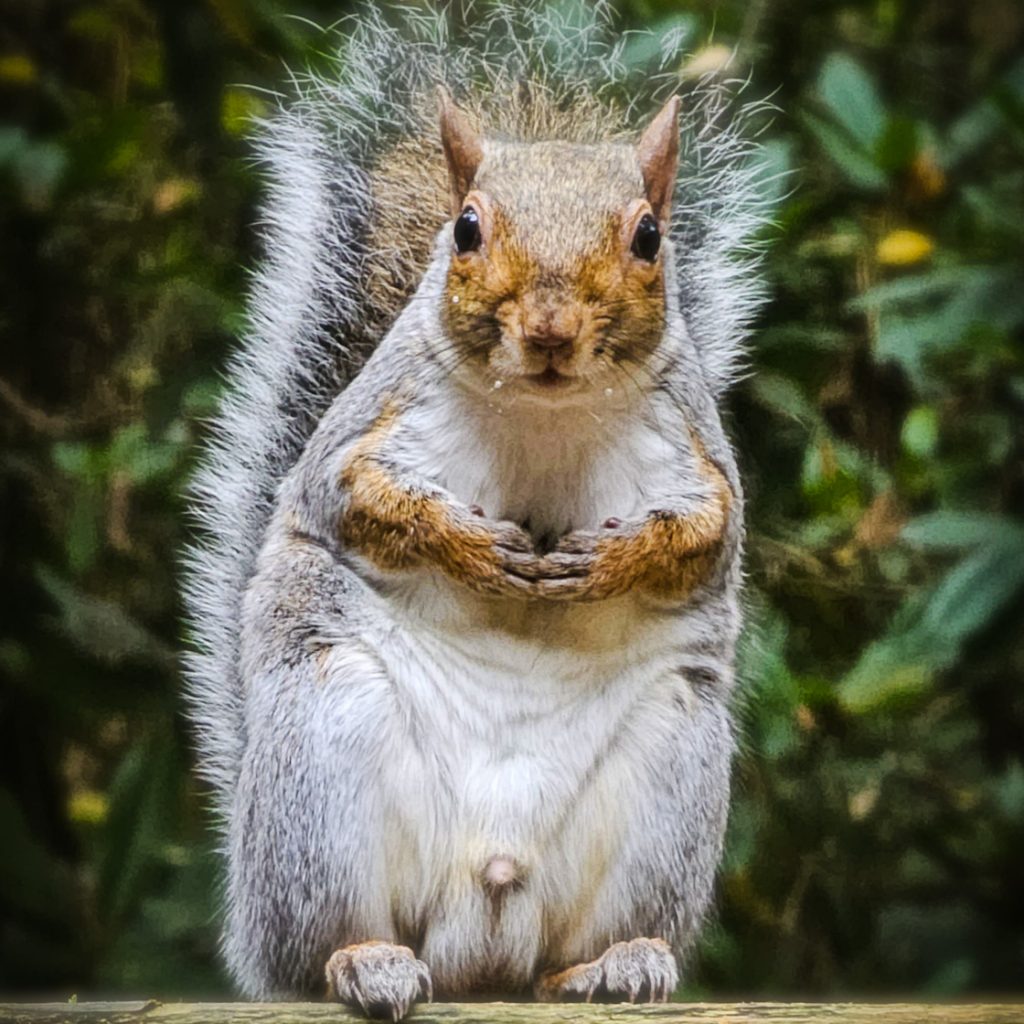
Squirrel

A cute grey squirrel visiting the cabin

An Evening Tradition: Nuts on the Porch

One of the small joys of my stay became leaving out nuts on the porch each night. At first, it was just for the squirrels, but I’d heard whispers that other creatures might be tempted if I was patient.

The first evening, I scattered a handful of peanuts and waited. The squirrels came almost immediately, bold and curious. But as dusk fell, the woods grew quieter, and I noticed shadows moving at the edge of the clearing. Something was watching.

I left the nuts, went inside, and sat by the window with the lights low. A little after nightfall, I saw them — the unmistakable snuffling shapes of badgers. My heart leapt.

Ben Badger Treats

Preparing healthy snacks for a night of wildlife watching

Meeting the Badgers

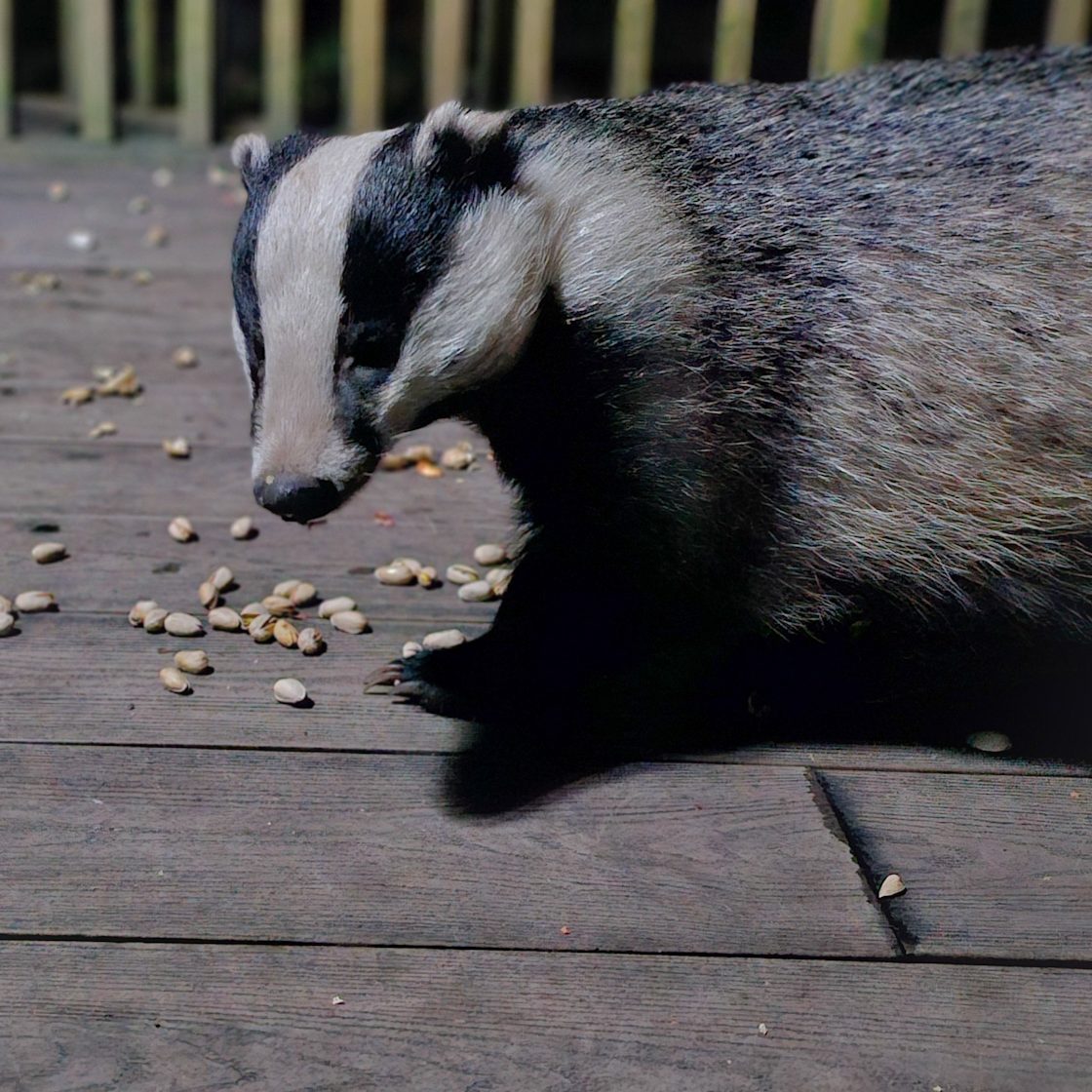
The badgers arrived cautiously, as if they’d been down this path many times before but still wanted to be sure. One by one, they shuffled onto the porch, noses twitching, claws clicking softly on the wood as they searched out the peanuts I’d left behind.

It was surreal, being so close. They weren’t bothered by me watching from just a few feet away, as long as I stayed still. Their coarse fur glistened in the low light, and they moved with a mix of purpose and clumsy charm. At times, they’d glance up at me with small, dark eyes before returning to their feast.

I felt like I’d been given a private showing of one of Britain’s most elusive creatures. It wasn’t just a wildlife sighting; it felt like a quiet moment of trust between us.
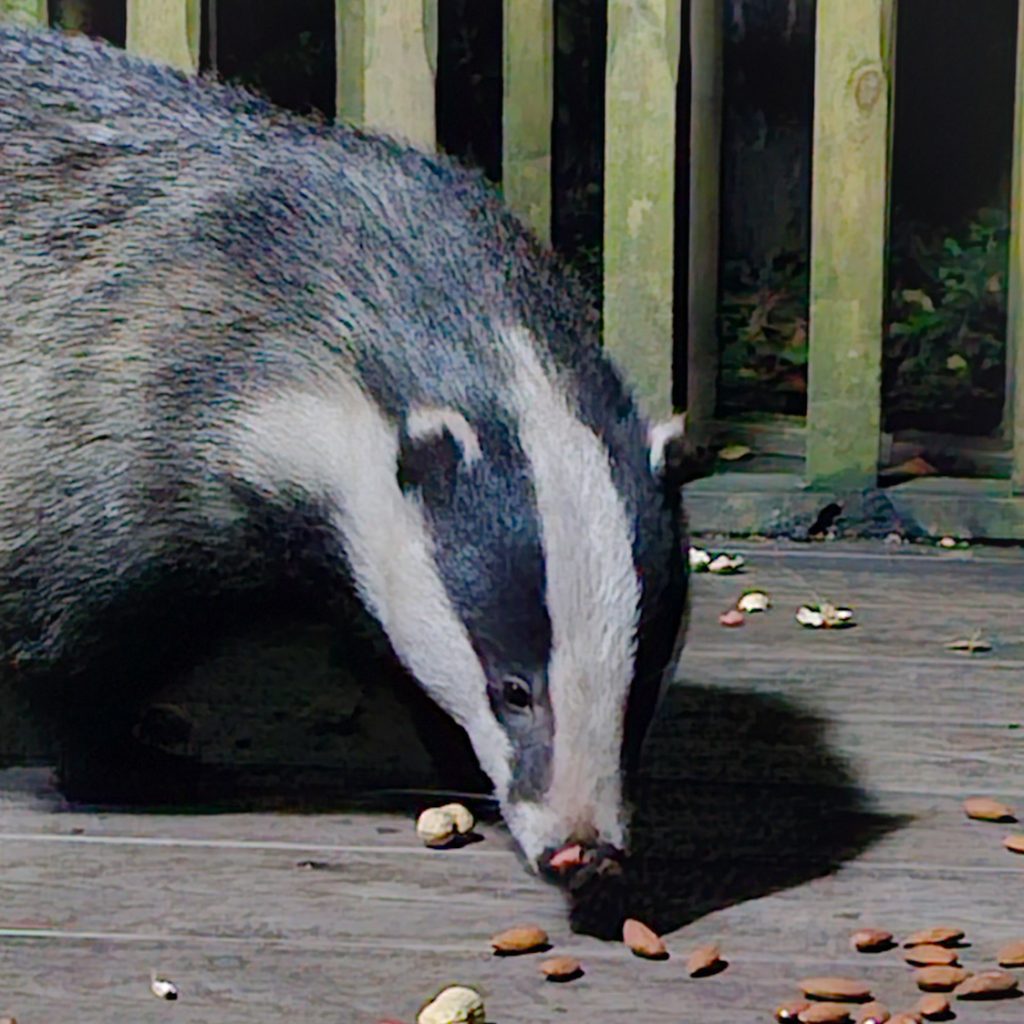
Badger Eating Nuts 2

Badger cautiously approaching the cabin

Nights in the Forest

Every evening after that, I continued the tradition. The routine became a kind of ritual: scatter nuts, retreat to the window seat, wait. The squirrels were my warm-up act, and the badgers the headline performers.

Sometimes it was one or two badgers, other nights a whole family would appear. They squabbled over nuts, snorted softly at each other, and sometimes came so close I could hear them breathing.

When the woods finally fell silent again, I’d step back onto the porch, wrap myself in a blanket, and look up at the stars. With no city lights around, the night sky was dazzling, full of constellations I rarely get to see. It was the perfect end to each day.
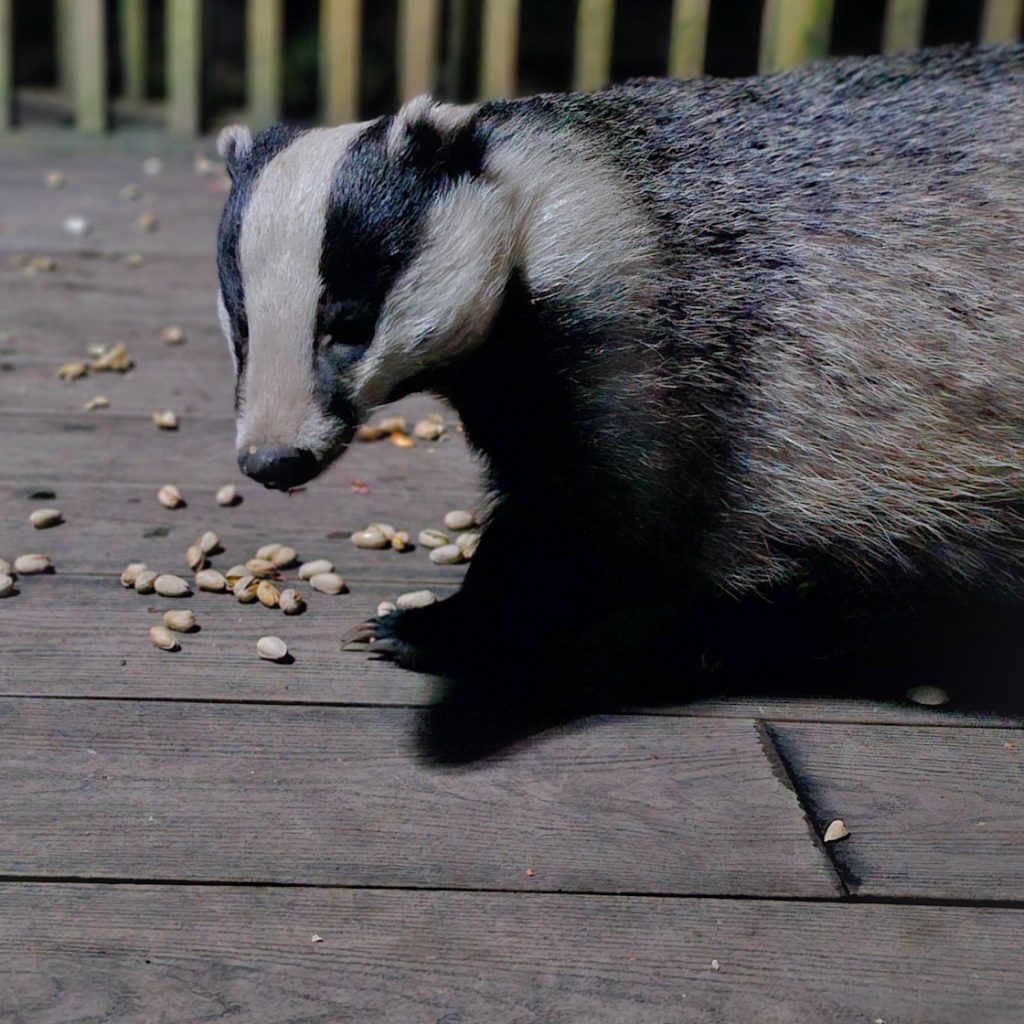
Badger Eating Nuts 3

Badger eating peanuts

Reflections on My Stay

Staying in the forest wasn’t just about relaxation — it was about connection. Connection to the quiet, to the wildlife, to the simple pleasures of being surrounded by trees instead of traffic.

I left with hundreds of photos, but more importantly, with memories of encounters I’ll never forget. Watching badgers feed just a few feet away, sipping coffee while squirrels tumbled around me, sitting in a cabin where the only soundtrack was the forest itself — these are the kinds of travel experiences that stay with you long after the trip is over.

We often travel to tick off big sights or chase bucket-list moments, but sometimes the most meaningful experiences come from slowing down and letting nature come to you. My time in the woods reminded me of that.

The cabin, the squirrels, the badgers — they gave me more than just a getaway. They gave me a glimpse into a world that goes on quietly every night, hidden from most of us. And for a few days, I was lucky enough to be part of it.
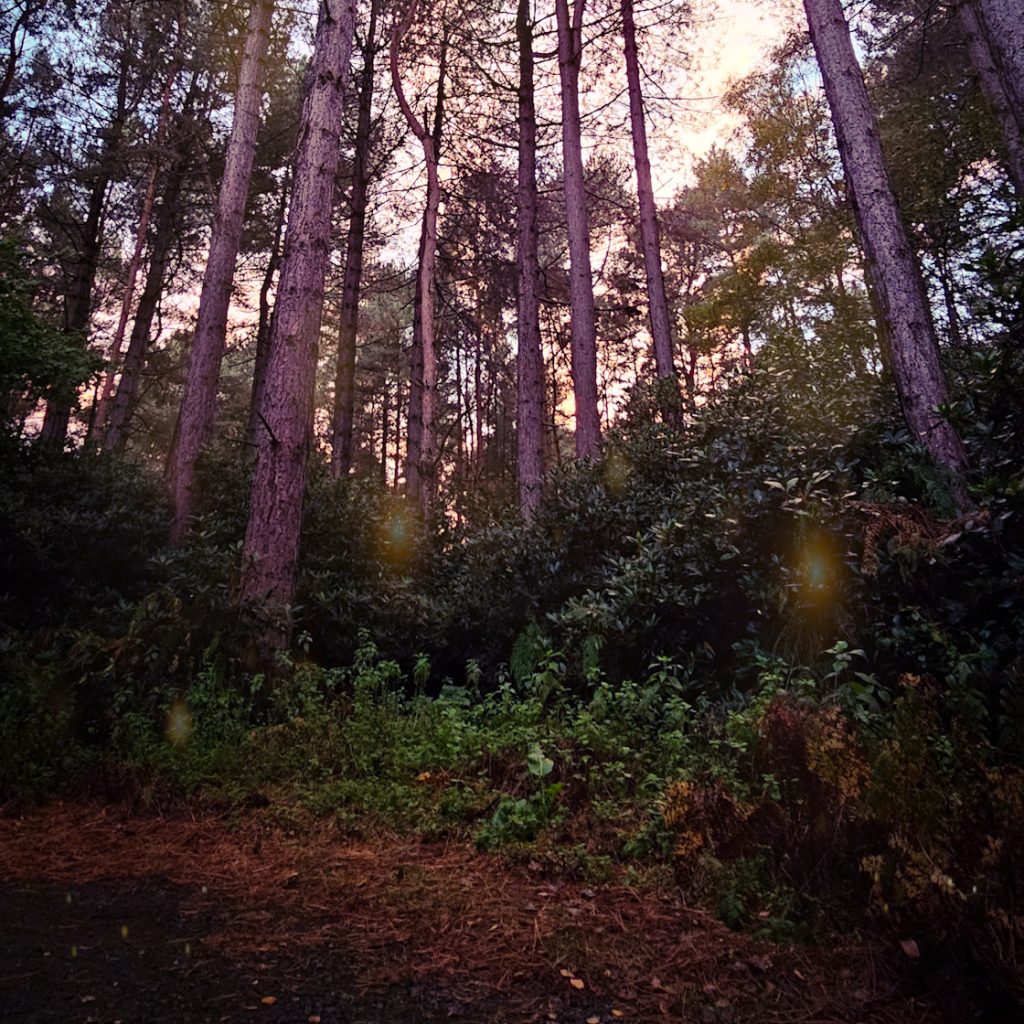
Griffon Forest

A woodland full of badgers, squirrels and other wildlife
Yellowstone National Park in Winter

A journey through Yellowstone with National Geographic

Yellowstone National Park in Winter

Visiting Yellowstone in December feels like stepping into another world. Snow blankets the landscape, steam rises from geothermal pools, and the usual crowds are replaced by silence and the occasional whisper of wildlife. Traveling with National Geographic and exploring the park by Yellowstone snowcoach made this winter adventure both immersive and unforgettable.

Some of the highlights of our journey included:

  • Wildlife in Lamar Valley: Watching wolves in their natural habitat, alongside herds of bison and elk, was an unforgettable experience.
  • Mammoth Hot Springs: The colorful geothermal terraces contrasted beautifully against the snowy backdrop.
  • Old Faithful and Geyser Basins: Capturing the iconic geyser erupting amidst snow-covered surroundings offered a surreal photo opportunity.
  • Grand Canyon of Yellowstone: The frozen waterfalls and snowy canyon walls were breathtaking, especially viewed from Artist Point.
  • Each moment offered unique photography and nature experiences.
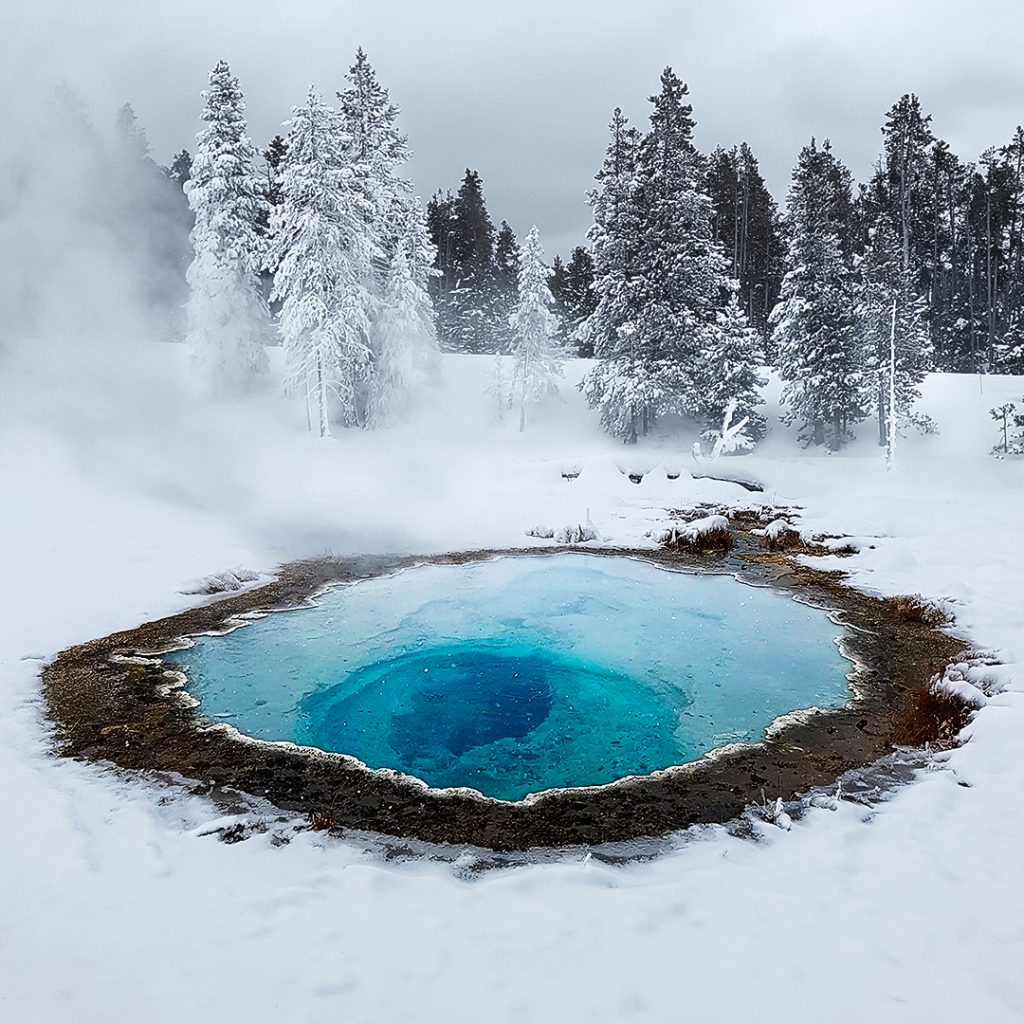
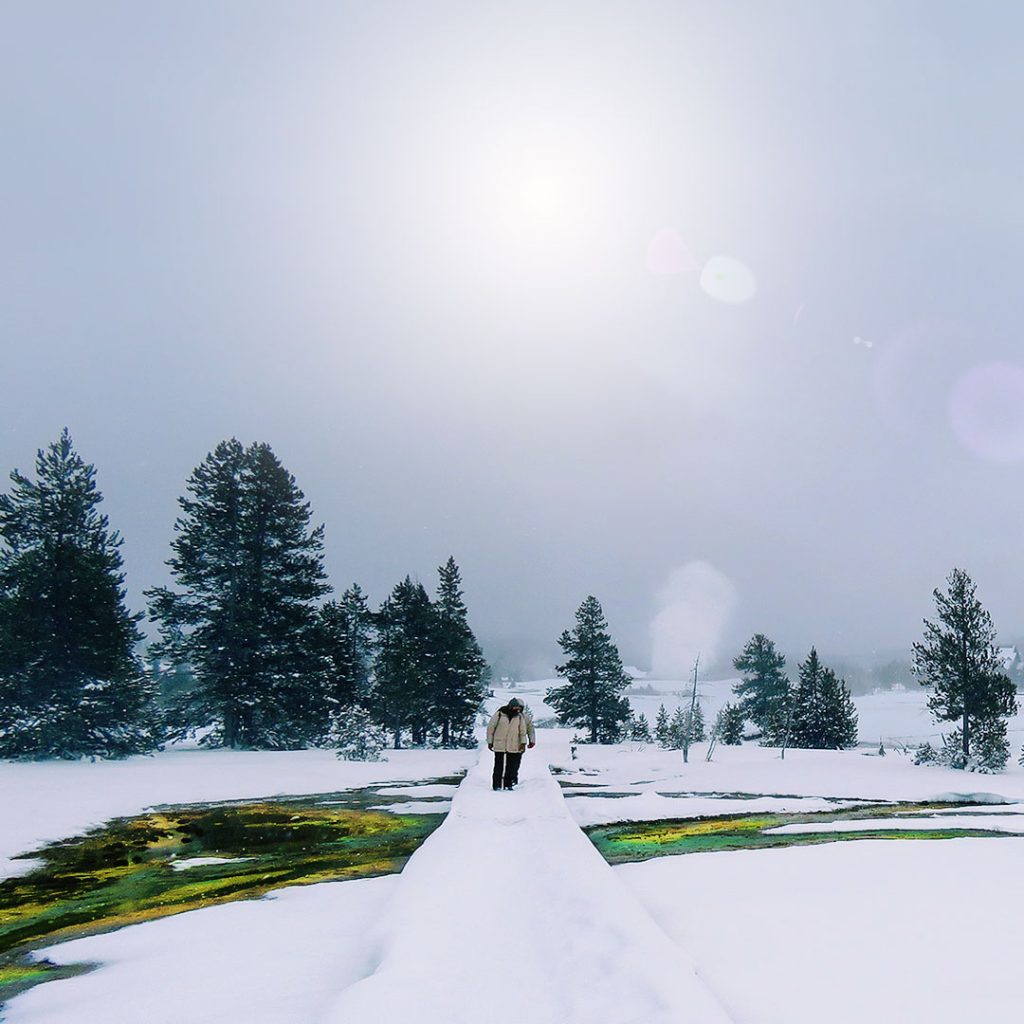
Silex Spring on the Fountain Paint Pot Trail in the Lower Geyser Basin of Yellowstone National Park

Silex Spring, found along the Fountain Paint Pot Trail in the Lower Geyser Basin of Yellowstone National Park, a must see at any time of year

Boarding the Snowcoach: A Journey Begins

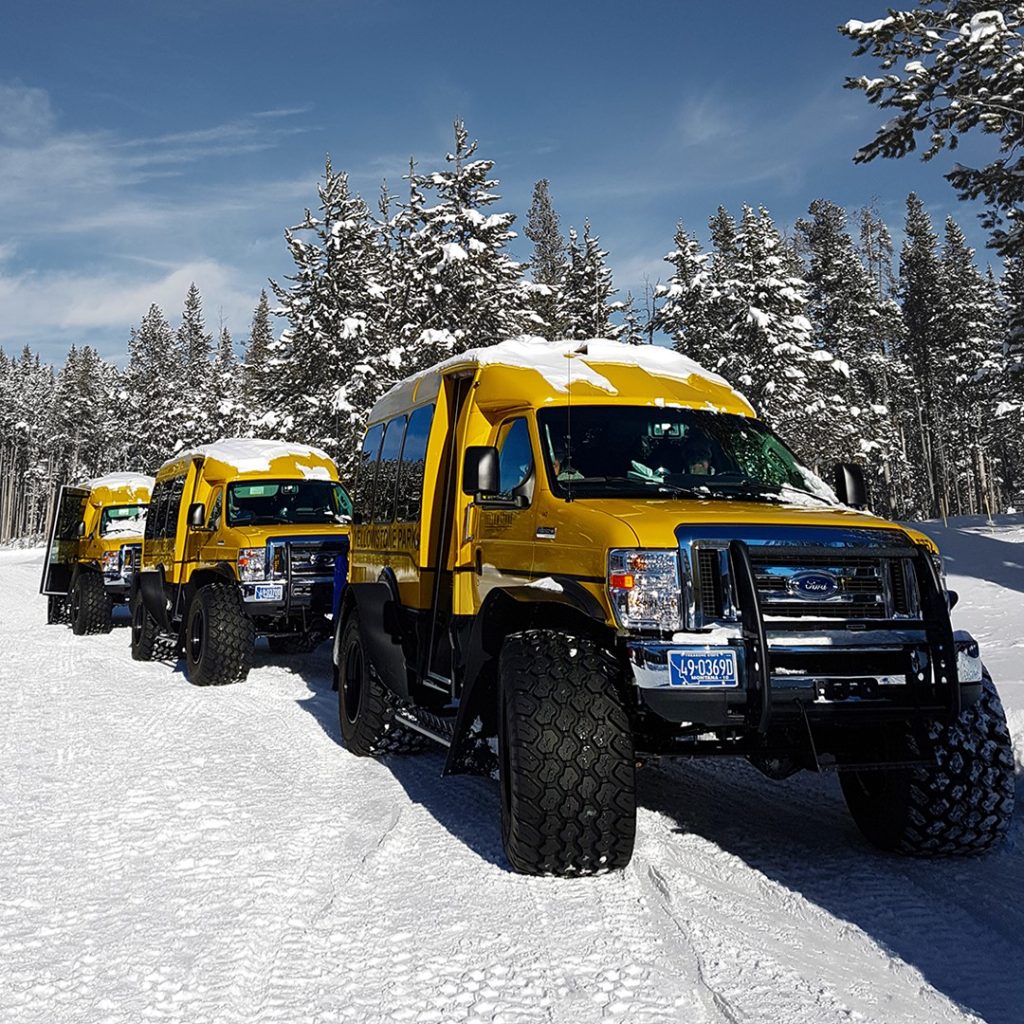
Our adventure began early in the morning, as we boarded the iconic yellow snowcoaches. These rugged vehicles are specially designed to navigate Yellowstone’s snow-covered roads, with oversized tyres and heated interiors that make winter exploration surprisingly comfortable. Sitting inside, I felt like a modern-day explorer, ready to chase steam vents and wildlife tracks across this frozen landscape.

The snowcoaches were more than transportation—they became our mobile observation deck. Large windows offered uninterrupted views of snow-dusted forests and steaming geysers, while our guide shared insights about the park’s geology, ecology, and winter survival strategies for its wildlife.

Yellowstone Snow Coach

With the thick snow cover, the only vehicles that can safely travel through the park over winter are snowmobiles and the yellow snowcoach

Frozen Beauty: Geysers and Hot Springs

Yellowstone’s geothermal features were mesmerizing in winter. Plumes of steam rose dramatically from geysers, contrasting sharply with the crisp, white snow around them. Old Faithful erupted in the morning light, and the steam seemed almost ethereal, drifting across the icy boardwalks.

We stopped at the colorful Grand Prismatic Spring, where the warm mineral-rich waters created surreal swirls against the icy landscape. Photography enthusiasts in our group were in heaven, but even without a camera, it was impossible not to be mesmerized by the raw power and beauty of the earth.

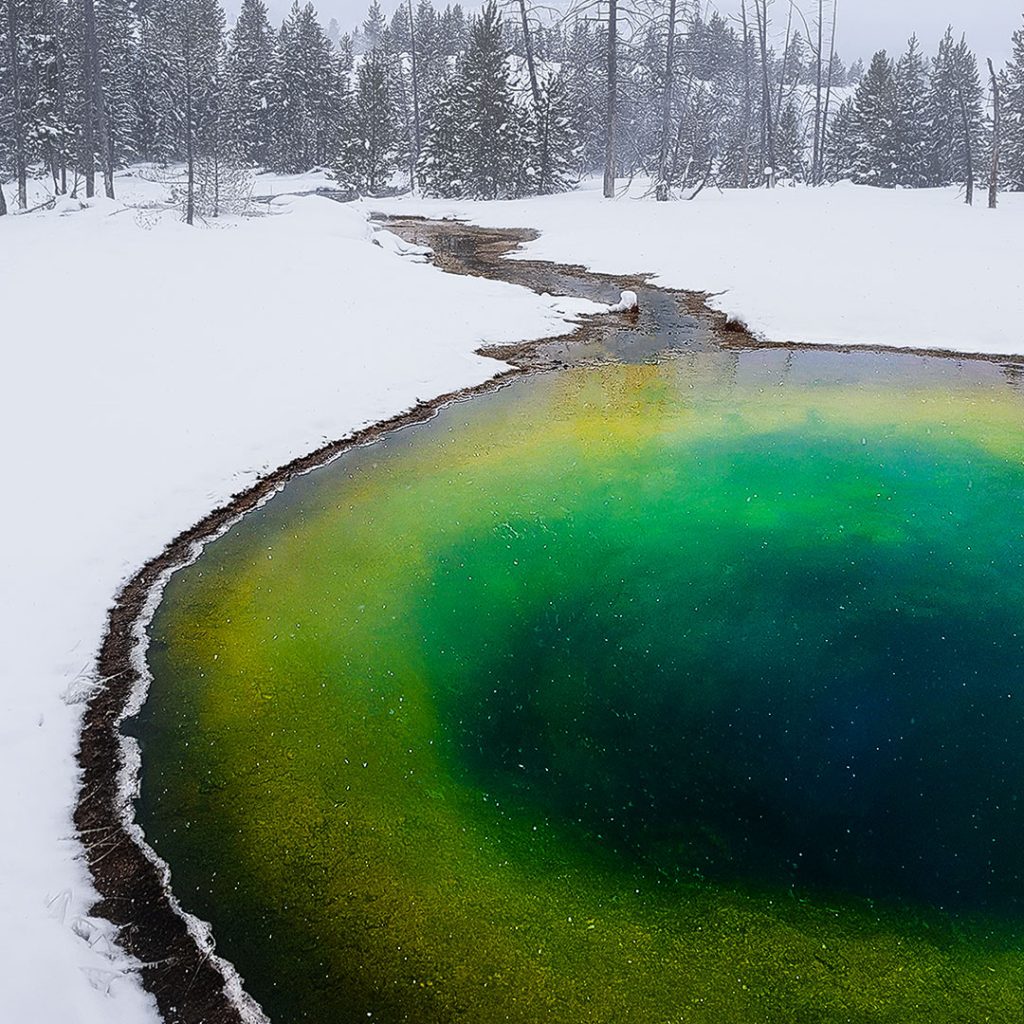
Yellowstone Upper Geyser Basin

The Yellowstone Upper Geyser Basin looks like a portal to another universe

Close Encounters: Wildlife in the Snow

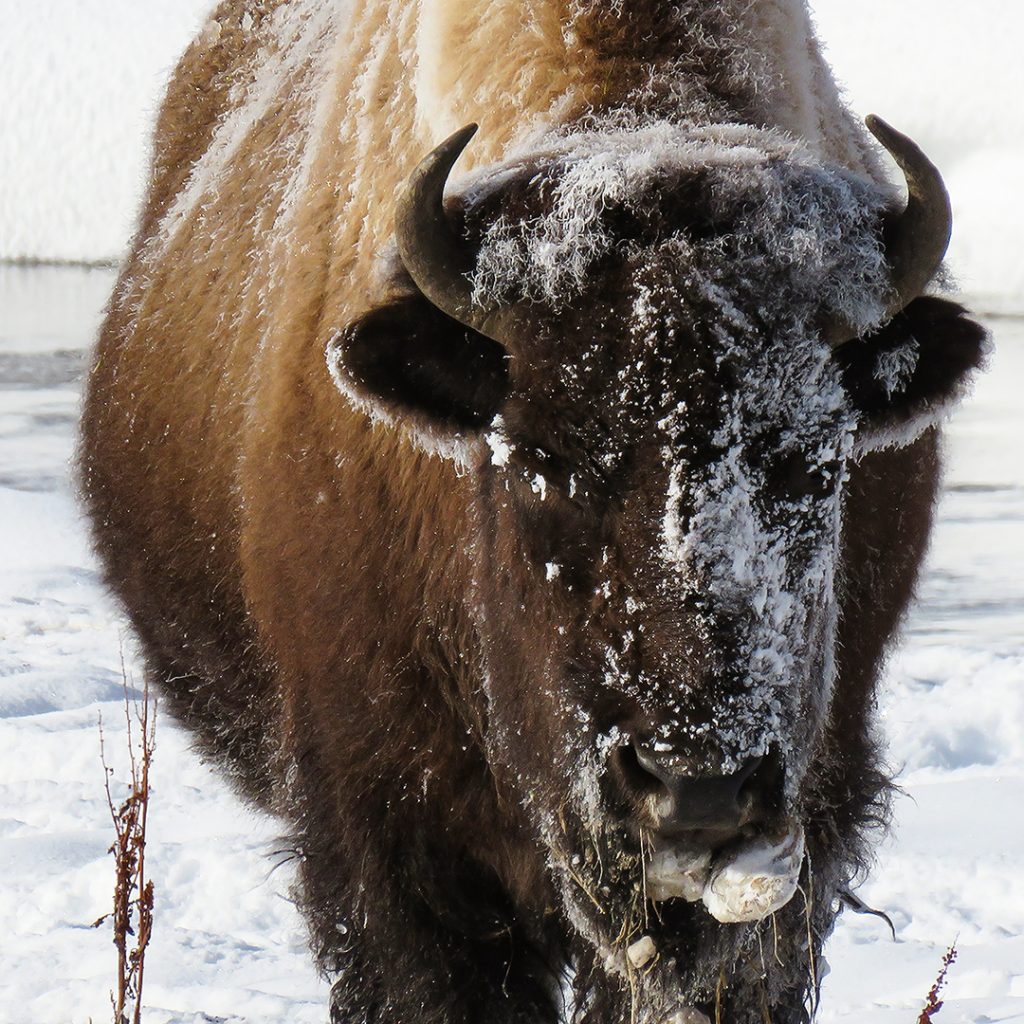
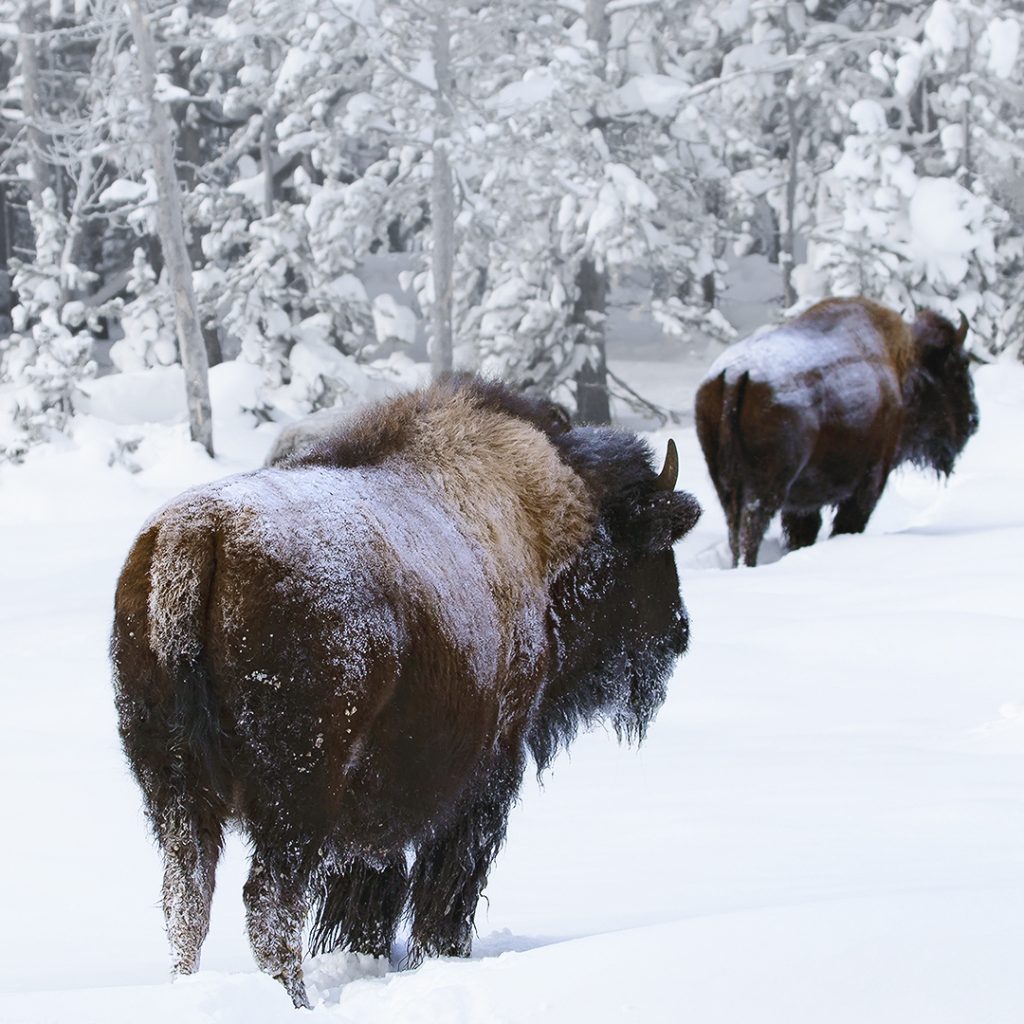
Winter in Yellowstone is a prime time to see wildlife, and the snow made every encounter feel cinematic. Through the snowcoach windows, we spotted a herd of bison moving slowly across the frozen plains, their massive forms dwarfing the landscape. Steam rising from their bodies in the cold air made them look almost prehistoric.

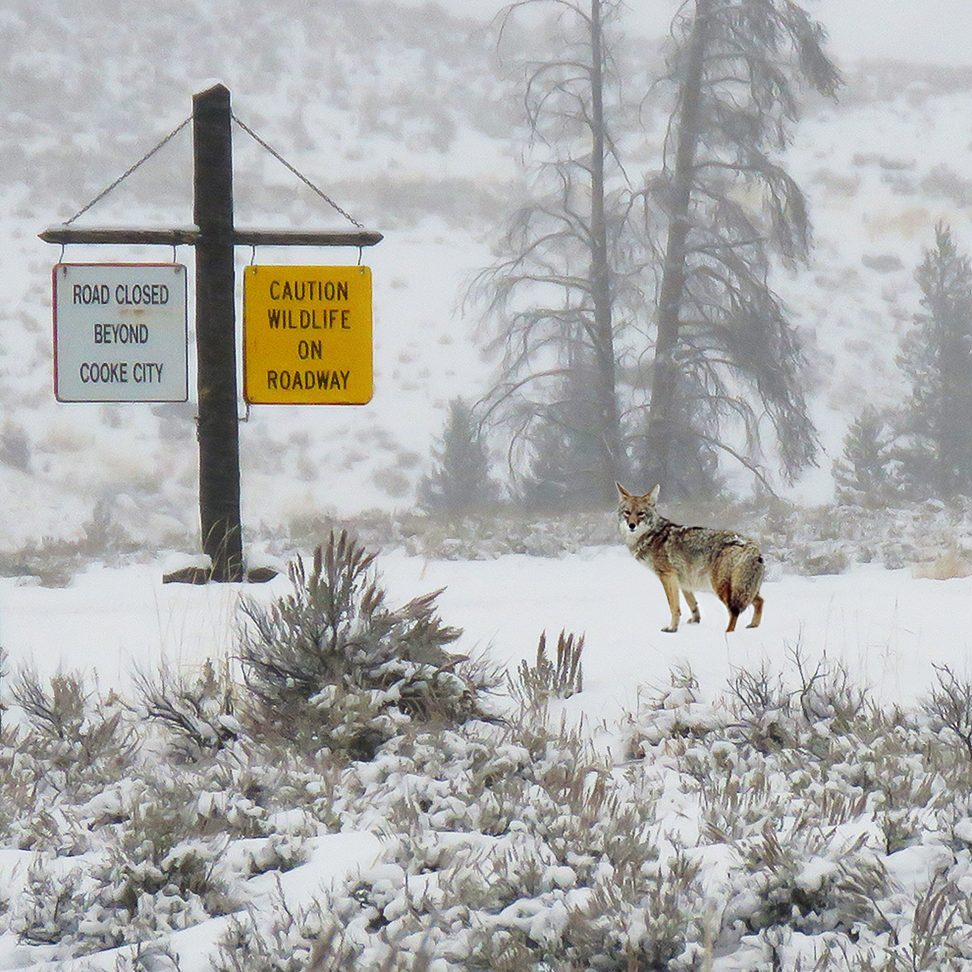
Later, we witnessed a lone gray wolf hunting in the distance, its sleek form weaving silently through the snow. Our guide pointed out elk tracks in the drifts, explaining how the herd had moved through the area overnight. Coyotes, red foxes, and bald eagles made brief appearances, each sighting a reminder of the park’s vibrant winter ecosystem.

Perhaps the most magical moment came when a herd of elk appeared in the valley just as the sun set. Their breath rose in white clouds, and the snowcoach slowed to let us watch in awe. Moments like this are why a winter visit feels so intimate—you’re not just observing nature; you’re a quiet participant in it.

Bison Of Yellowstone National Park 4

Bison Of Yellowstone National Park

Learning from the Experts: National Geographic Guides

One of the highlights of the trip was the guidance from National Geographic experts. They explained how bison conserve energy in extreme cold, why wolves are more active in winter, and how thermal features shift with the freezing temperatures. Their storytelling transformed each stop into a lesson in natural science, and their passion was contagious.

Snowcoach travel also allowed us to venture deeper into remote parts of the park that are otherwise inaccessible in winter. With heated seats and large windows, we could comfortably watch wildlife and scenery unfold without disturbing the animals—a perfect balance of adventure and conservation-minded travel.

Bison Of Yellowstone National Park

Bison trudging through Yellowstone National Park

Reflection: Why Winter Yellowstone Feels Different

Experiencing Yellowstone in December is unlike any other season. The combination of snow, wildlife, steaming geothermal features, and quiet solitude creates a magical, almost otherworldly atmosphere. Traveling by snowcoach with National Geographic made it accessible, comfortable, and deeply educational, allowing me to witness the park’s wonders safely and sustainably.

By the end of the trip, I understood why winter is considered a secret season in Yellowstone. It’s quieter, wilder, and more intimate—an unforgettable experience that leaves you feeling connected to nature in its most pristine form.

Yellowstone Caldera

Exploring the Yellowstone Caldera with minor geyser eruptions around every corner